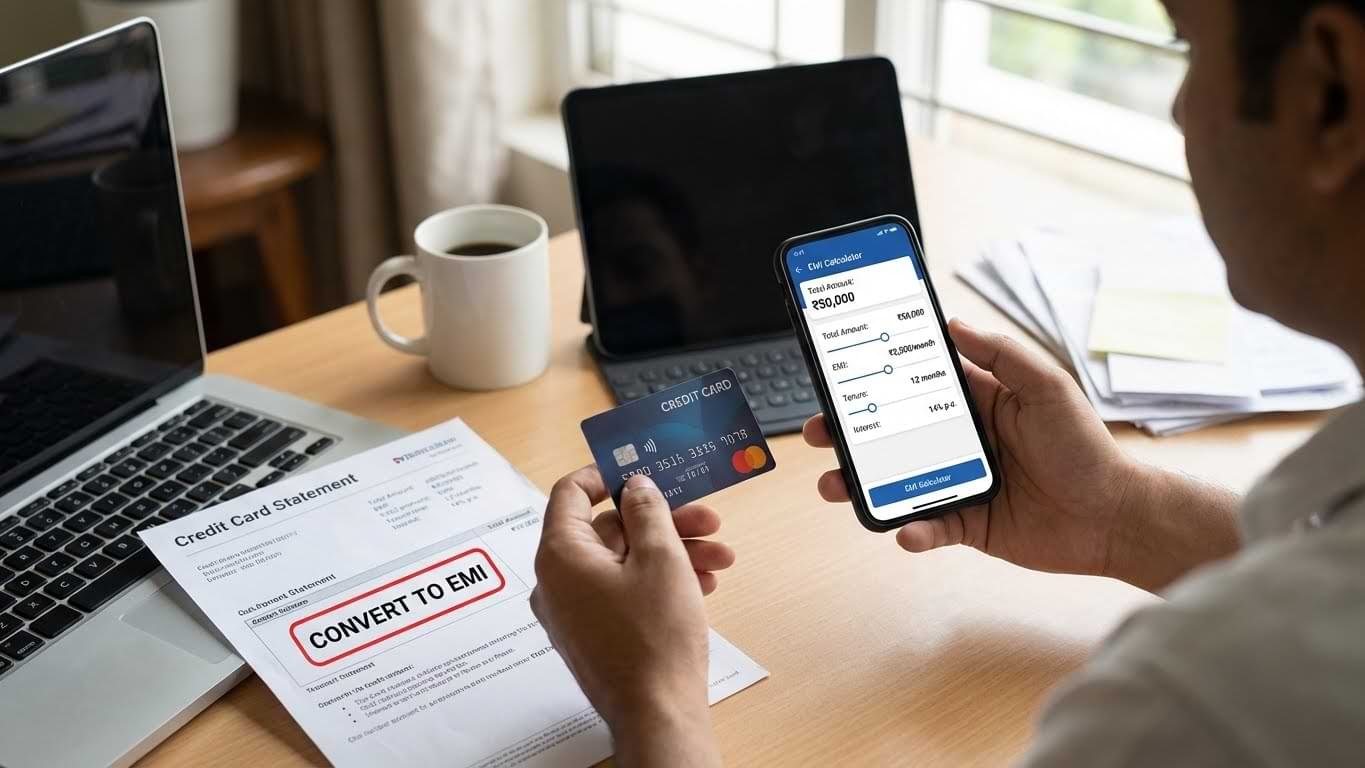
When you need money for a big expense—like buying a phone, laptop, furniture, medical treatment, wedding costs, or even travel—you usually have two popular options:
-
Credit Card EMI
-
Personal Loan
Both look easy. Both promise fast approval. Both allow monthly payments.
But the real question is:
👉 Which one actually saves more money?
👉 Which option is cheaper in the long run?
👉 Which one is better for your credit score and mental peace?
Many people choose the wrong option and end up paying extra interest, hidden charges, or long-term debt.
In this detailed guide, we will clearly explain Credit Card EMI vs Personal Loan, using simple English that even a 7th-grade student can understand.
What Is Credit Card EMI?
Credit Card EMI allows you to convert a credit card purchase or outstanding balance into monthly installments.
Instead of paying the full amount at once, you pay:
-
Fixed monthly EMIs
-
Over a chosen period (3, 6, 9, 12, 18, or 24 months)
Example of Credit Card EMI
-
Purchase amount: ₹1,00,000
-
EMI tenure: 12 months
-
Interest rate: 15%–24% per year
Common Types of Credit Card EMI
-
No-Cost EMI (offered by merchants)
-
Regular EMI with Interest
-
Outstanding Balance EMI
What Is a Personal Loan?
A Personal Loan is an unsecured loan given by banks or NBFCs for personal use.
You receive:
-
A lump sum amount
-
Fixed EMI
-
Fixed interest rate
-
Fixed repayment tenure (1–5 years)
Example of Personal Loan
-
Loan amount: ₹1,00,000
-
Tenure: 24 months
-
Interest rate: 10%–18% per year
Why People Get Confused Between Credit Card EMI and Personal Loan
Both options:
-
Are easy to get
-
Require minimal paperwork
-
Offer fast approval
-
Have fixed EMIs
But cost structure, interest calculation, and long-term impact are very different.
Credit Card EMI vs Personal Loan: Quick Comparison Table
| Feature | Credit Card EMI | Personal Loan |
|---|---|---|
| Interest Rate | 15%–42% | 9%–18% |
| Processing Fee | Low or hidden | 1%–3% |
| Tenure | Short (up to 24 months) | Longer (up to 5 years) |
| Credit Limit Impact | Yes | No |
| Credit Score Impact | High | Moderate |
| Best For | Small purchases | Large expenses |
Which Option Has Lower Interest Rate?
Credit Card EMI Interest Rate
Most credit cards charge:
-
15% to 42% APR
-
Interest may be hidden under “processing fees” or “foreclosure charges”
Even No-Cost EMI often includes:
-
Processing fee
-
GST on interest
-
Reduced cashback benefits
Personal Loan Interest Rate
Personal loans usually offer:
-
Lower interest rates
-
Transparent EMI structure
-
Predictable repayment
👉 Winner: Personal Loan (cheaper interest)
Which One Is Cheaper Overall?
Let’s Compare With a Real Example
Credit Card EMI
-
Amount: ₹1,00,000
-
Interest: 18%
-
Tenure: 12 months
-
Total repayment: ~₹1,09,800
Personal Loan
-
Amount: ₹1,00,000
-
Interest: 12%
-
Tenure: 12 months
-
Total repayment: ~₹1,06,600
👉 Personal Loan saves ~₹3,200
Is Credit Card EMI Really “No-Cost”?
This is a very important question.
Truth About No-Cost EMI
-
Interest is added
-
Merchant gives discount equal to interest
-
Processing fee still applies
-
GST still applies
-
Refund rules are complex
So No-Cost EMI is not always zero cost.
How Credit Card EMI Affects Your Credit Limit
When you convert a purchase to EMI:
-
Full amount is blocked from your credit limit
-
Limit frees slowly as EMIs are paid
This means:
-
Less spending power
-
Higher credit utilization
-
Possible credit score drop
How Personal Loan Affects Your Credit Score
Personal loans:
-
Do not block your credit card limit
-
Improve credit mix
-
Build long-term credit history
If EMIs are paid on time, credit score improves steadily.
Which Option Is Better for Large Expenses?
For expenses like:
-
Wedding
-
Medical emergency
-
Home renovation
-
Debt consolidation
👉 Personal Loan is better
Why?
-
Lower interest
-
Longer tenure
-
Less monthly pressure
Which Option Is Better for Small Purchases?
For items like:
-
Smartphone
-
Laptop
-
TV
-
Washing machine
👉 Credit Card EMI can be okay, if:
-
EMI tenure is short
-
Interest is low or zero
-
You already have spending control
Hidden Charges You Must Know
Credit Card EMI Hidden Costs
-
Processing fee
-
GST on interest
-
Foreclosure charges
-
Late payment penalty
-
Loss of reward points
Personal Loan Hidden Costs
-
Processing fee
-
Prepayment charges (sometimes)
Which One Is Easier to Get Approved?
Credit Card EMI Approval
-
Instant
-
No income proof
-
Based on credit limit
Personal Loan Approval
-
Income proof required
-
Credit score important
-
Takes 1–3 days
👉 Credit Card EMI is easier, but not cheaper.
Credit Card EMI vs Personal Loan: Stress Factor
Credit Card EMI Stress
-
Credit limit remains blocked
-
High interest risk
-
Multiple EMIs if misused
Personal Loan Stress
-
One fixed EMI
-
Clear end date
-
Better budgeting
👉 Personal Loan is less stressful
Which Option Is Better for Debt Consolidation?
If you already have:
-
Multiple credit cards
-
High outstanding balances
👉 Personal Loan is better
It helps:
-
Reduce interest
-
Simplify payments
-
Improve credit score
When Should You Choose Credit Card EMI?
Choose Credit Card EMI if:
-
Purchase amount is small
-
EMI tenure is short
-
Interest rate is low
-
No other debt exists
When Should You Choose Personal Loan?
Choose Personal Loan if:
-
Amount is large
-
You want lower interest
-
You need longer tenure
-
You want better credit health
Common Mistakes People Make
-
Choosing EMI for everything
-
Ignoring interest rate
-
Falling for “No-Cost EMI” ads
-
Using EMI without budget planning
-
Not comparing loan offers
How to Decide the Right Option (Simple Checklist)
Ask yourself:
-
How much money do I need?
-
What is the interest rate?
-
What is total repayment amount?
-
Will it affect my credit limit?
-
Can I afford EMI comfortably?
Final Verdict: Which One Saves More Money?
👉 For most people and most situations:
Personal Loan saves more money than Credit Card EMI.
Credit Card EMI is convenient, but convenience often costs more.
Frequently Asked Questions (FAQs)
Q1. Is Credit Card EMI cheaper than Personal Loan?
Usually no. Personal loans have lower interest.
Q2. Does Credit Card EMI affect credit score?
Yes, especially if credit utilization increases.
Q3. Is No-Cost EMI really free?
Not fully. Fees and GST still apply.
Q4. Can I close Credit Card EMI early?
Yes, but foreclosure charges may apply.
Q5. Which is better for beginners?
Personal Loan is safer for large amounts.
Google AdSense & Google AdX Policy Disclaimer
This article is written only for educational and informational purposes.
It does not promote guaranteed financial outcomes or misleading claims.
All information complies with Google AdSense and Google AdX content policies, making it safe for monetized websites.
